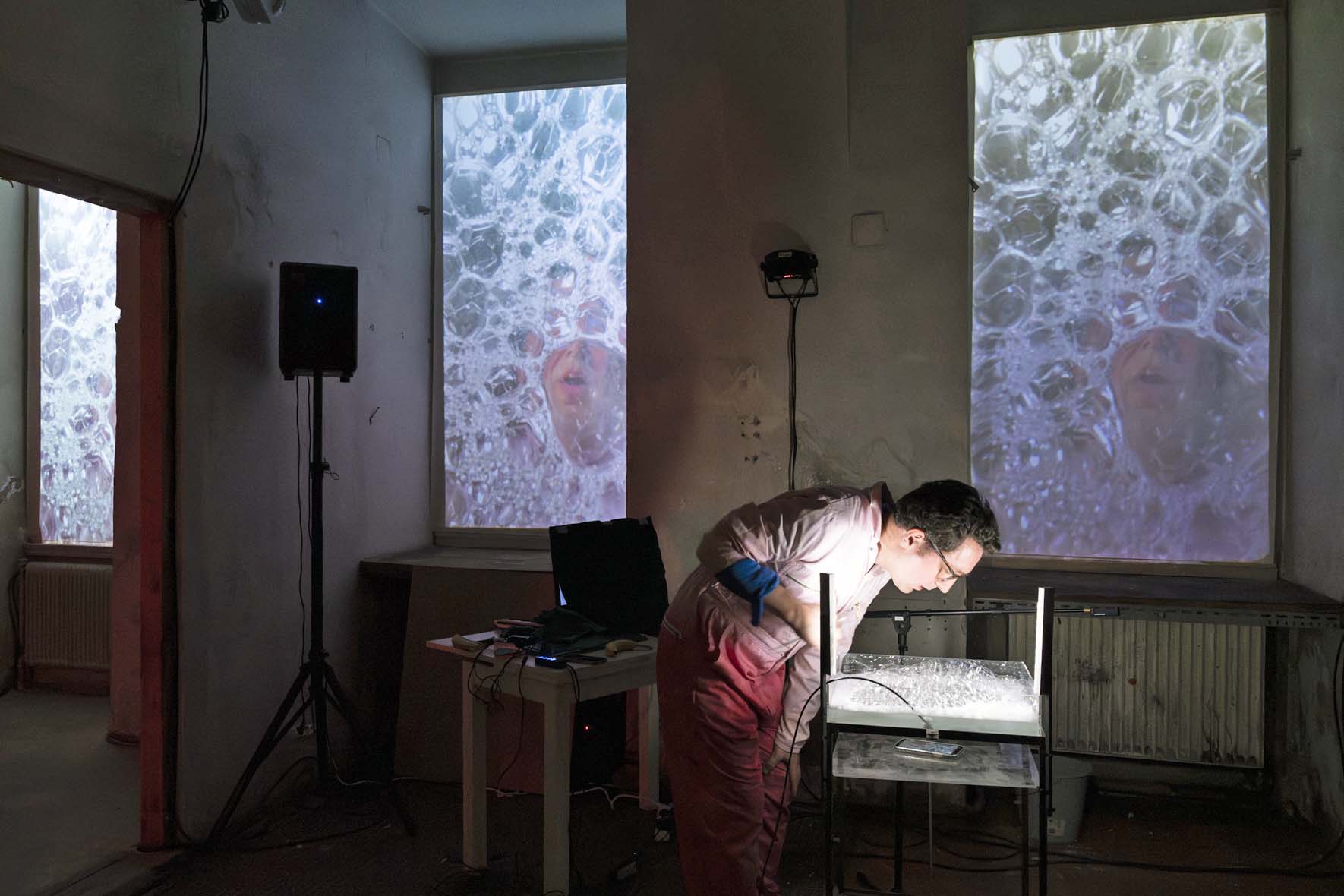
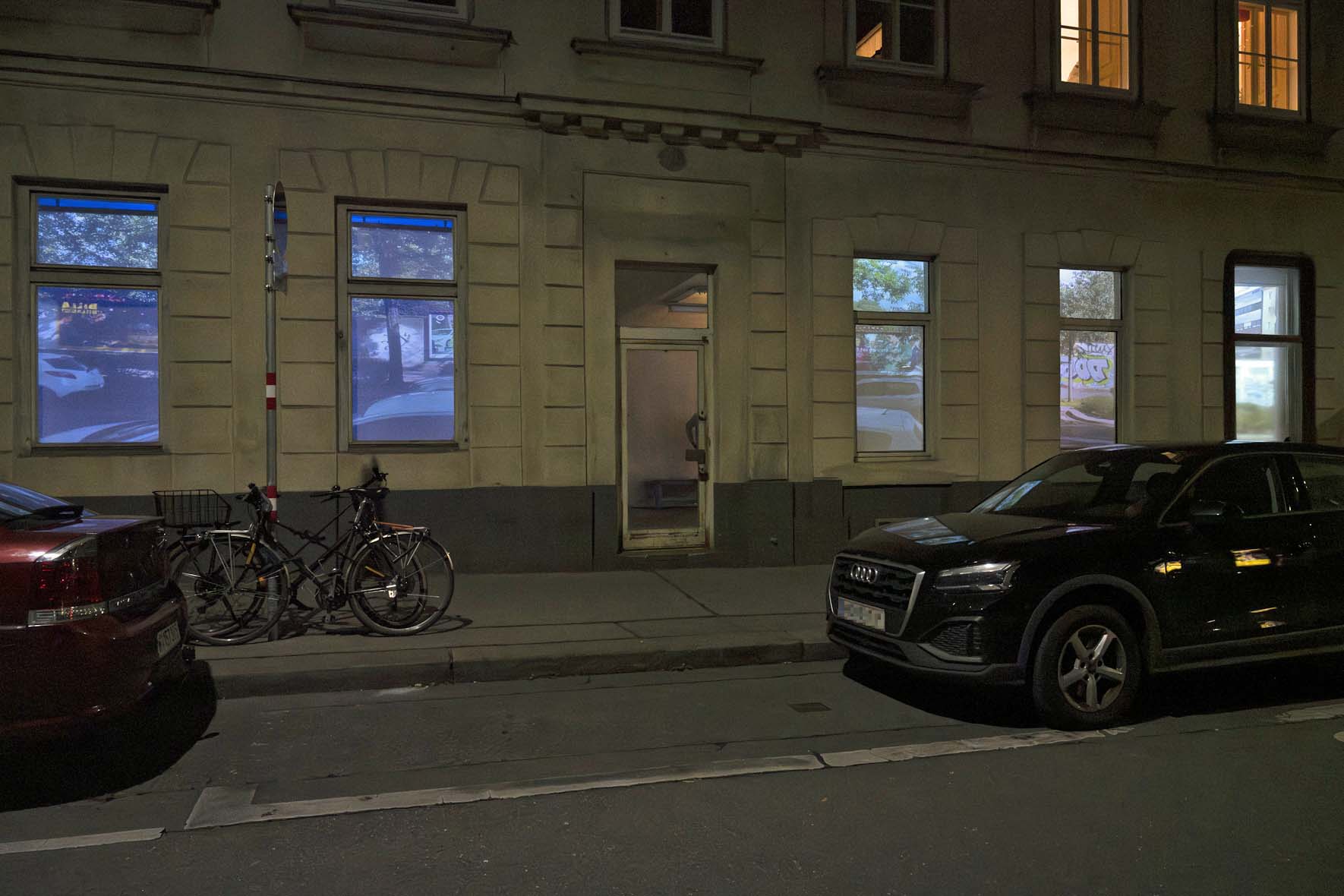
For every day display, Jan Machacek and Angélica Castelló transform a street local into a walk-in installation and a place for performative events. The conflicts between family and public life are examined in this semi-public space.
Jan Machacek describes his everyday life with children and his role as a father in the field of tension between care, happiness and excessive demands.
every day display tells of the tensions and demands of life with children. It is about the contrasts between productive and reproductive work, care and self-determination, domesticity and the outside world from a very personal perspective.
Jan Machacek focuses on the need to change traditional gender roles and shows the persistence with which they are reproduced. What does (gender) sensitive education mean in the face of a dystopian present full of militarization, the alt-right movement and manosphere?
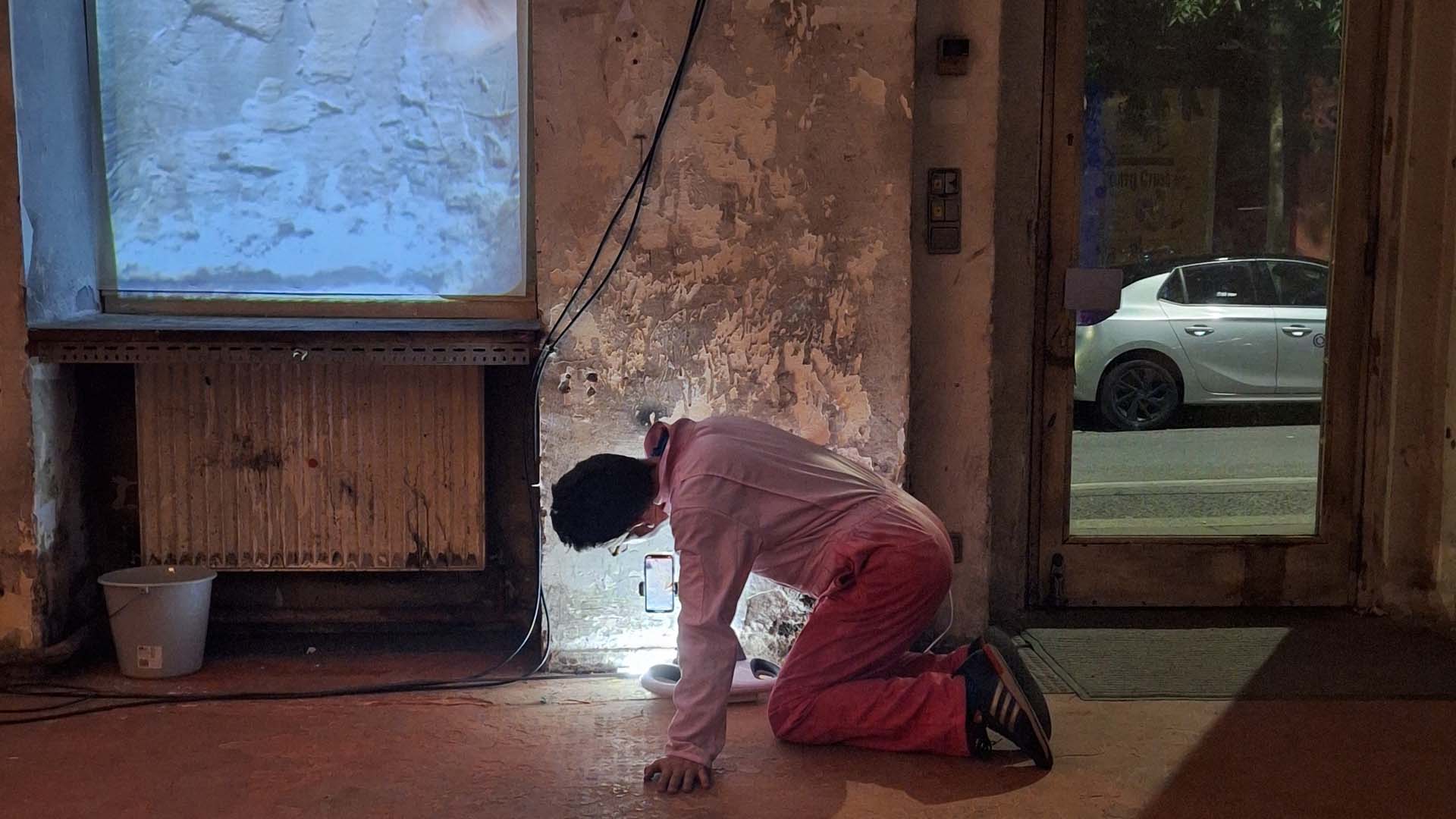
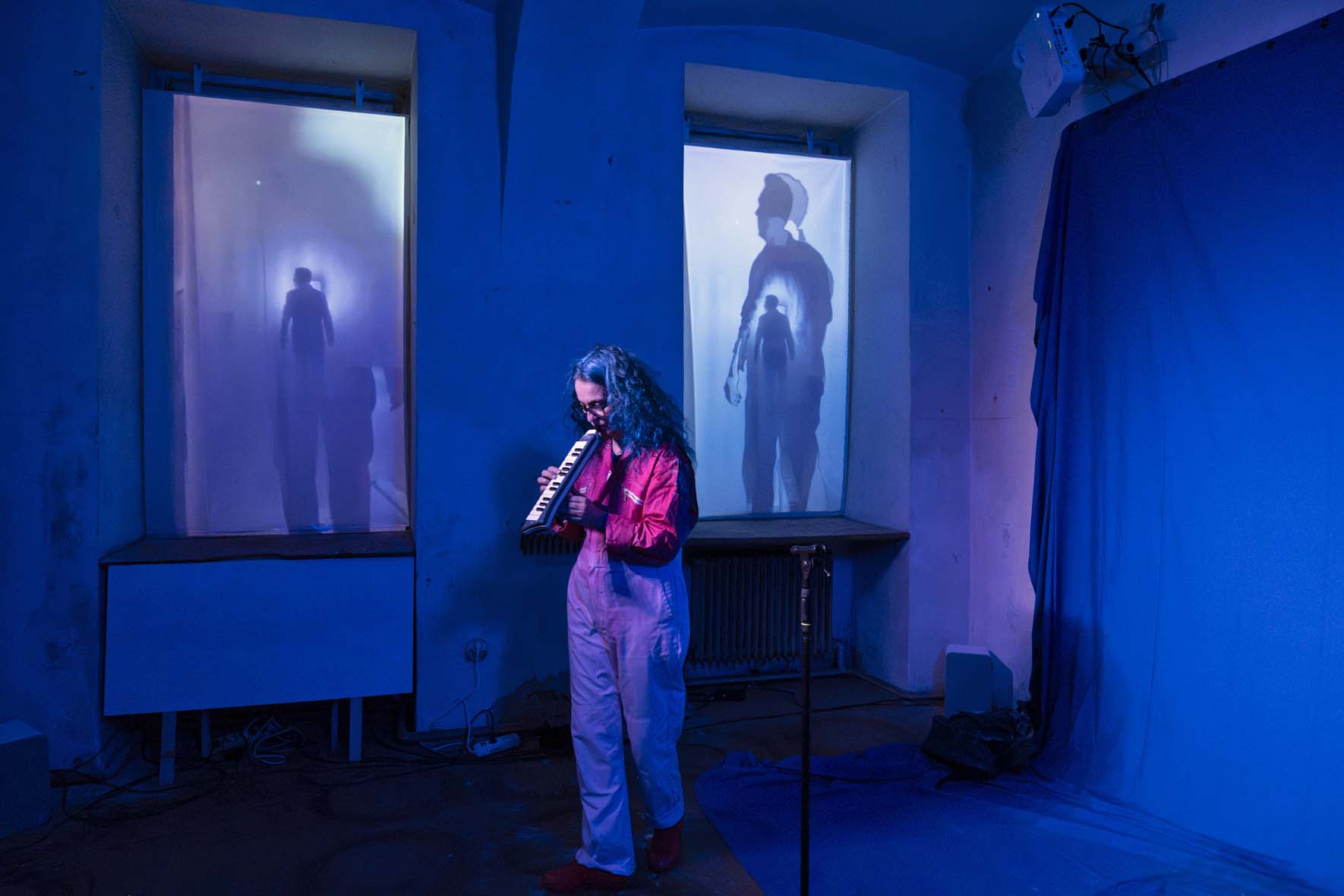
Composer Angélica Castelló will provide the musical accompaniment to the performance each evening. She creates a constantly changing soundtrack live – a musique cinématique full of electro-acoustic soundscapes. Lo-fi and hi-fi machines are activated and played by her and the performer in equal measure.
Excerpts from the text Wellen (Waves) by Heinz Helle can be heard as an commentary. In a diary-like collage, the author describes the ups and downs of his everyday life as a father and his efforts to have an equal relationship in a society in which old ideals and gender relations still prevail.
every day display relates personal and social discourses to each other and creates a resonance space for reflection.

Credits
Space, video, performance Jan Machacek
Composition & live music Angélica Castelló
Text Waves by Heinz Helle
Light Bartek Kubiak
Consulting Sabine Marte, Frans Poelstra
Programming Oliver Stotz
Costumes Anke Philipp, Michaela Landrichter
Photos Sophie Pölzl
Graphic Michael Jung / Metaphor
Video documentation Victor Jaschke
Production management Ines Kaiser
A production by am apparat in cooperation with brut Wien
Supported by the City of Vienna’s Department of Cultural Affairs (MA7) and the Federal Ministry of Housing, Arts, Culture, Media and Sport (BMWKMS)
Thanks to Ernst Reitermaier